Commercial Dehumidifier Humidistats and Setpoints
Quick answer: Confirm sensor location and accuracy before treating the displayed percentage as the condition of the whole space.
As an Amazon Associate, we may earn from qualifying purchases.
Compare LDHTHOPI 145 Pint Commercial Dehumidifier on Amazon
What the humidistat actually controls
A humidistat compares sensed relative humidity with a setpoint and calls for dehumidification according to its control logic. It does not directly measure how much water is in framing, inventory or concrete. Relative humidity also changes with temperature, so the displayed percentage can move even when the absolute moisture content changes little.
Some commercial units sense return air inside the cabinet; others accept a remote wall control or building automation signal. The location determines what the machine believes. Before changing settings, identify the active sensor and whether the fan must run to bring representative air across it.
Sensor placement can dominate the reading
A sensor in the dry discharge stream may satisfy early while distant zones remain damp. A wall sensor beside an exterior door may read recurring humidity spikes. Heat sources, cold masonry, supply registers and direct sunlight also distort local conditions. Place independent verification instruments in representative occupied or vulnerable zones, not merely where mounting is convenient.
Large warehouses and divided spaces need multiple readings. Compare peak and average values and note door schedules. If a single dehumidifier serves ducts, evaluate return-air conditions and critical rooms separately. One percentage cannot describe an uneven building.
Check accuracy without chasing decimals
Compare the controller with a reliable reference instrument placed adjacent for enough time to equilibrate. Avoid holding a warm handheld meter or moving it directly from outdoors and expecting an immediate match. Consumer and commercial sensors have tolerances; consult their documentation before treating a small difference as failure.
If the offset is consistent and the controller permits calibration, follow the manual exactly and record the correction. A drifting or intermittent difference may indicate contamination, condensation, aging or wiring problems. Replacement can be more defensible than repeatedly adjusting around an unstable sensor.
Choose the setpoint from the purpose
Occupied comfort, crawl-space control, document storage and structural drying have different goals. Select an acceptable band based on the materials, process, health and preservation requirements involved. Avoid choosing the lowest available number as a default; very low settings increase runtime, heat and energy and may be unattainable for refrigerant equipment in cool air.
For mold-risk management, humidity control is only one layer. It does not remove existing contamination or stop liquid-water entry. For restoration, material-moisture goals and drying documentation matter in addition to ambient RH.
Understand differential and cycling
Controls generally use a differential or hysteresis so the compressor does not restart every time the reading moves by a fraction. A unit might stop near the target and restart several points higher, depending on design. Fan sampling, minimum off-time and defrost add other delays. Read the control sequence before diagnosing normal cycling as inaccurate.
If the machine starts and stops rapidly, inspect sensor placement and air mixing. Dry discharge recirculating directly into the inlet can satisfy the controller while the wider space remains humid. Duct changes or circulation may solve what a lower setpoint cannot.
Remote controls and building automation
A remote humidistat can represent the space better, but its wiring, priority and failure mode must be understood. Determine whether local controls remain active, what happens if communication is lost, and whether an alarm means high humidity or merely lost connectivity. Fixed low-voltage work should follow the installation instructions and applicable requirements.
Building automation can trend conditions, equipment calls and alarms. Use those trends to compare runtime with weather and operations. Do not assume a dashboard value is accurate indefinitely; include sensor verification in commissioning and maintenance.
A practical commissioning check
Document the target band, sensor locations and reason for each. Compare built-in and independent readings under stable conditions. Create a controlled humidity call, observe compressor and fan response, then confirm shutdown and restart behavior. Walk the served area to identify stagnant zones. Finally, record settings and restrict casual changes where appropriate.
Revisit readings after normal business activity and during representative weather. Commissioning on an empty mild day may miss loading-door, occupancy or production peaks. The successful setting is one that controls the relevant space without unnecessary cycling or energy use.
Diagnose a reading that jumps or drifts
Rapid jumps often reflect air moving across the sensor, a door opening or switching between fan and compressor modes. Slow drift may follow temperature change, sensor contamination or aging. Compare the controller with two independent locations before recalibrating. If all instruments move together, the building is changing; if only one moves, examine that instrument and its immediate environment.
Condensation directly on a humidity sensor can temporarily produce extreme readings and may damage some devices. Address the environmental cause and follow drying or replacement instructions. Do not spray cleaner into a sensor opening. When accuracy affects protected inventory or a contractual drying target, use instruments with documented calibration and retain the certificates and check dates.
Products to compare for this decision
The products below are exact Amazon catalog records selected for this topic. We have not hands-on tested every machine. Confirm the current variation, seller, capacity conditions, electrical requirements, drainage configuration, warranty and availability before buying.
As an Amazon Associate, we may earn from qualifying purchases.
 B0GGZDLMM2
LDHTHOPI 145 Pint Commercial Dehumidifier
145-pint class; drain hose; automatic defrost. Verify every listed specification and variation on Amazon before ordering.
Check on Amazon B0FWB57KYQ
AEOCKY 8000-Square-Foot Commercial Dehumidifier
large-space listing; Energy Star claim; verify rated condition. Verify every listed specification and variation on Amazon before ordering.
Check on Amazon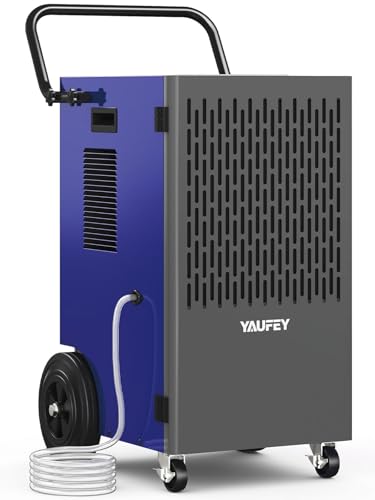 B0CN6ZST2Q
Yaufey 155 Pint Commercial Dehumidifier With Pump
155-pint class; pump; humidity control. Verify every listed specification and variation on Amazon before ordering.
Check on AmazonFrequently asked questions
Why does my humidistat disagree with my hygrometer?
Location, equilibration time, sensor tolerance and calibration can all create differences. Compare them side by side under stable conditions before adjusting either one.
Should I set the unit much lower than my target?
No. That can waste energy and still fail to correct poor sensor placement or air distribution. Set an appropriate band and verify remote areas.
Can one humidistat control a large warehouse?
It can control one system, but one sensing point may not represent the building. Use multiple monitoring locations and address zoning or circulation when conditions vary.
Final verdict
A humidistat controls the condition at its sensor, not every surface and room. Identify the active sensor, validate it with a reference, choose a purpose-based band and confirm the control sequence across real operating conditions. Better placement and air mixing usually beat an artificially low setpoint. Preserve the commissioned setting and sensor locations in writing so later changes can be evaluated against evidence rather than preference.
Continue the research
What Is a Dehumidifier With a Pump?
A condensate pump lifts collected water through tubing when gravity alone cannot reach the drain.
Open guide →Commercial vs Residential Dehumidifiers
Compare duty cycle, construction, airflow, serviceability and rated conditions rather than relying on the word commercial.
Open guide →AHAM Pints vs Saturation Pints on Dehumidifiers
The same machine can show very different pint numbers because warmer, wetter test air yields more condensate.
Open guide →LGR vs Conventional Refrigerant Dehumidifiers
LGR designs are intended to maintain water removal deeper into a drying job, but exact performance curves matter.
Open guide →Use the commercial sizing calculator or return to the commercial dehumidifier guide.